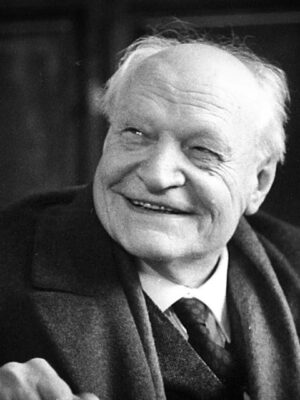
2-3-4. Giuseppe Ungaretti (1888-1970) nasce ad Alessandria d’Egitto, dove vive fino al 1912, quando si trasferisce a Parigi. La sua prima plaquette, Il porto sepolto, esce nel 1916: è il primo nucleo di quello che sarà poi l’Allegria. Intanto Ungaretti, interventista convinto, si arruola da volontario con l’esercito italiano e combatte in trincea. Dopo la fine della guerra viaggia come giornalista e conferenziere, per poi trasferirsi a San Paolo, in Brasile, dove è professore universitario di Lingua e Letteratura italiana. Intanto pubblica svariate edizioni dell’Allegria e del Sentimento del tempo, nonché un volume di traduzioni. Nel 1942 Ungaretti si trasferisce di nuovo in Italia, dove lavora all’Università di Roma e pubblica altre raccolte di poesie. Nel 1969 le sue raccolte vengono radunate nella silloge Vita d’un uomo. Tutte le poesie.
Il porto sepolto è il primo volume di versi di Ungaretti, ed esce in edizione numerata (solo ottanta copie) per la prima volta nel 1916. Nelle poesie di questa raccolta la guerra è occasione per riflettere sulla condizione umana: è come se il conflitto ponesse l’individuo al di là del tempo ordinario, favorendo la scoperta di ciò che è essenziale per l’uomo. Con questo libro Ungaretti contribuisce a rinnovare in profondità il linguaggio poetico italiano.
2-3-4. Giuseppe Ungaretti (1888–1970) was born in Alexandria, Egypt, where he lived until 1912 before moving to Paris. His first chapbook, Il porto sepolto (The Buried Port), was released in 1916; it formed the initial core of what would later become his famous collection, L’Allegria (The Joy).
Meanwhile, Ungaretti—a staunch interventionist—enlisted as a volunteer in the Italian army and fought in the trenches during World War I. After the war ended, he traveled extensively as a journalist and lecturer before moving to São Paulo, Brazil, where he served as a university professor of Italian Language and Literature. During this period, he published several editions of L’Allegria and Sentimento del tempo (Sentiment of Time), as well as a volume of translations.
In 1942, Ungaretti returned to Italy, where he taught at the University of Rome and published further poetry collections. In 1969, his works were gathered into the definitive anthology Vita d’un uomo. Tutte le poesie (Life of a Man: Complete Poems).
Il porto sepolto was Ungaretti’s first volume of verse, initially published in 1916 as a numbered edition of only eighty copies. In the poems of this collection, the war serves as an occasion to reflect on the human condition.
It is as if the conflict places the individual “beyond ordinary time,” facilitating the discovery of what is truly essential to humanity. With this book, Ungaretti contributed to a profound renewal of Italian poetic language, stripping it down to its most pure and evocative elements.