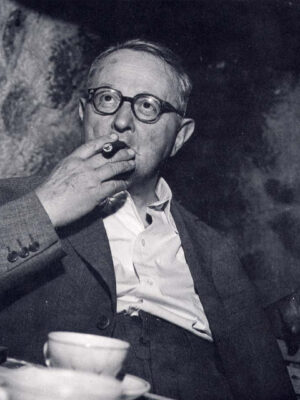
9. Camillo Sbarbaro (1888-1967) ha trascorso gran parte della propria vita in Liguria, dove inizialmente ha lavorato presso l’industria siderurgica di Savona, quindi come insegnante di latino e greco. Nel secondo decennio del Novecento pubblica le prime raccolte di poesie, la più importante delle quali è Pianissimo (1914); collabora anche ad alcune riviste letterarie, fra le quali «La Voce». Allo scoppio della guerra si arruola come volontario nella Croce Rossa Italiana; in seguito è chiamato a combattere al fronte. A quel periodo sono ispirate alcune prose poi confluite nei Trucioli (1919). Nell’ultima parte della sua vita si è dedicato alla botanica e allo studio dei licheni, diventando un esperto di fama internazionale.
Stracci di nebbia lenti viene pubblicato per la prima volta all’interno di Rimanenze, una raccolta tarda di Sbarbaro, uscita per Scheiwiller nel 1955. Il testo risale al 1918. La Grande Guerra ha un impatto sulla scrittura di Sbarbaro fin da subito, come è evidente dalle prose scritte in quel periodo, ma la memoria del conflitto è presente anche in testi successivi. Nelle poesie di Sbarbaro scritte durante la guerra si notano soprattutto la riduzione della prospettiva al contesto vegetale e animale, e la pervasività del tema della morte.
9. Camillo Sbarbaro (1888-1967) spent most of his life in Liguria, where he initially worked in the steel industry in Savona, and later as a teacher of Latin and Greek. In the second decade of the twentieth century, he published his first poetry collections, the most important of which is Pianissimo (1914); he also collaborated with several literary magazines, including “La Voce.” At the outbreak of the war, he enlisted as a volunteer in the Italian Red Cross; later, he was called to fight at the front. Several prose pieces inspired by that period were later included in Trucioli (1919). In the final part of his life, he dedicated himself to botany and the study of lichens, becoming an internationally renowned expert.
Stracci di nebbia lenti was published for the first time within Rimanenze, a late collection by Sbarbaro released by Scheiwiller in 1955. The text dates back to 1918. The Great War had an impact on Sbarbaro’s writing from the very beginning, as is evident from the prose pieces written during that period, but the memory of the conflict is also present in later texts. In Sbarbaro’s poems written during the war, one notices above all the reduction of perspective to the botanical and animal context, and the pervasiveness of the theme of death.