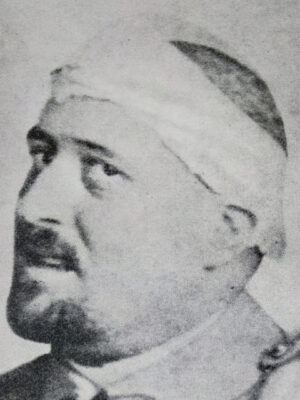
11. Guillaume Apollinaire (1880-1918) è nato a Roma da padre italiano e madre di origini polacche. Dopo aver seguito la madre in Francia, inizia a lavorare a Parigi, alternando vari mestieri. Inizia a scrivere prime poesie e racconti su rivista, inventando lo pseudonimo con il quale è diventato famoso. Instaura svariate relazioni sentimentali, sempre tumultuose. Nel 1911 pubblica Le Bestiaire ou Cortège d’Orphée, nel 1913 la raccolta di poesie Alcools. Negli anni successivi instaura rapporti molto fitti con artisti e mercanti d’arte dell’epoca (da Picasso a Braque e a Léger). Viene accolto nell’esercito francese nel dicembre 1914, dopo aver fatto domanda per due volte e aver ottenuto la cittadinanza. A Nizza conosce Louise de Coligny-Châtillon, dedicataria dei famosi Poèmes à Lou (pubblicati postumi). Nel 1916 viene ferito a una gamba, mentre è in trincea, e trasferito in ospedale. In seguito è dichiarato inabile al servizio militare attivo. Nel 1918 pubblica una delle sue opere più famose, i Calligrammes. Muore a causa della febbre spagnola nel 1918.
Calligrammes comprende testi composti tra il 1912 e il 1916; quelli scritti durante la guerra fanno parte della terza sezione, Case d’Armons. Attraverso la disposizione delle parole nello spazio tipografico, in questi testi l’autore crea delle forme riconoscibili alla vista: i calligrammi, infatti, rappresentano una forma di poesia visiva, spesso usata dalle avanguardie.
11. Guillaume Apollinaire (1880-1918) was born in Rome to an Italian father and a mother of Polish origins. After following his mother to France, he began working in Paris, alternating between various jobs. He started writing his first poems and short stories in magazines, inventing the pseudonym by which he became famous. He established several romantic relationships, which were always tumultuous. In 1911, he published Le Bestiaire ou Cortège d’Orphée, and in 1913, the poetry collection Alcools. In the following years, he established very close relationships with artists and art dealers of the period (from Picasso to Braque and Léger). He was accepted into the French army in December 1914, after applying twice and obtaining citizenship. In Nice, he met Louise de Coligny-Châtillon, the dedicatee of the famous Poèmes à Lou (published posthumously). In 1916, he was wounded in a leg while in the trenches and transferred to a hospital. Subsequently, he was declared unfit for active military service. In 1918, he published one of his most famous works, the Calligrammes. He died of the Spanish flu in 1918.
Calligrammes includes texts composed between 1912 and 1916; those written during the war are part of the third section, Case d’Armons. Through the arrangement of words in the typographic space, in these texts the author creates forms recognizable to the eye: calligrams, in fact, represent a form of visual poetry, often used by the avant-garde.