Ordine sparso

Random Order

Umberto Saba, da Il Canzoniere (1921)

Ordine sparso

Se sparando mi appiatto entro il profondo
bosco, o sfuggo di corsa ove il sentiero
s’apre, è un gioco bellissimo che invero
la superficie m’innova del mondo.

Pensa: è un cespuglio, è un ciottolo rotondo
che nascondere deve il corpo intero.
Quel che più pesa diventa leggero
dice il soldato col suo grave pondo.

Il volo che nel grano entra e poi si scatta,
la pecora ricorda che i ginocchi
piega, indi pare che tutto s’abbatta.

E vedono il terreno oggi I miei occhi
come artista non mai, credo, lo scorse.
Così le bestie lo vedono forse.

Ascolta la poesia

Random Order
(Umberto Saba, 100 poems, edited by Patrick Worsnip, Carcanet, 2022, p. 34).

If, shooting, I flatten myself inside the thick
wood, or, where the path broadens out, I flee
at a run, it’s a wonderful game that truly
gives the face of the world a different look.

Think: there’s a bush, there’s a rounded rock
that has to hide away my whole body.
That which weighs most becomes almost weight-free –
I mean the soldier with his heavy pack.

Remember the bird entering the field of grain
then starting up, or the sheep bending low
its knees, then seeming to fall right down.

Today my eyes see the earth as no
artist ever saw it, I would say.
Maybe animals see it that way.

Listen to the poem

Bio

5-6. Umberto Saba (1983-1957) è lo pseudonimo di Umberto Poli. Saba nasce a Trieste, da cittadino italiano, nonostante la città appartenesse all’Impero austro-ungarico. Assume lo pseudonimo Saba (cioè «pane» in ebraico) in omaggio alla madre, ebrea, e alla balia slovena, Peppa Sabaz. Nel 1908 fa il servizio militare a Salerno, da volontario, senza però mai partecipare attivamente a operazioni di guerra. Trascorre il resto della sua vita a Trieste, dove gestisce una libreria di libri usati e vive con la moglie – Lina, dedicataria di svariate poesie – e la figlia, Linuccia. La sua opera principale è il Canzoniere, pubblicato in varie edizioni (la prima è del 1921), che comprende tutte le sue poesie. Nel Canzoniere Saba usa la prima persona singolare, e descrive luoghi, persone ed eventi della sua vita. Per Saba, infatti, la poesia deve essere innanzitutto autentica, oltre che “onesta”; inoltre la parola poetica nasce dal contatto con la realtà e con l’esperienza personale.
L’esperienza nell’esercito viene tradotta in versi nei Versi militari, composti nel 1908 e poi confluiti nel Canzoniere.
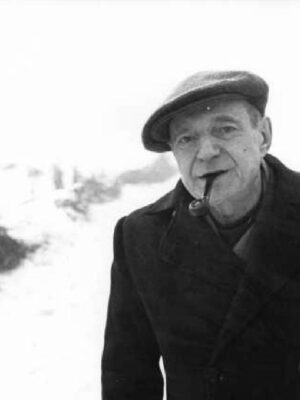

5-6. Umberto Saba (1883-1957) is the pseudonym of Umberto Poli. Saba was born in Trieste as an Italian citizen, even though the city belonged to the Austro-Hungarian Empire. He adopted the pseudonym Saba (meaning “bread” in Hebrew) in tribute to his mother, who was Jewish, and to his Slovenian nurse, Peppa Sabaz. In 1908, he performed his military service in Salerno as a volunteer, without ever actively participating in war operations. He spent the rest of his life in Trieste, where he managed a secondhand bookstore and lived with his wife—Lina, the dedicatee of several poems—and his daughter, Linuccia. His main work is the Canzoniere, published in various editions (the first in 1921), which includes all of his poems. In the Canzoniere, Saba uses the first-person singular and describes places, people, and events from his life. For Saba, in fact, poetry must be above all authentic, as well as “honest”; furthermore, the poetic word is born from contact with reality and personal experience. The experience in the army was translated into verse in the Versi militari, composed in 1908 and later incorporated into the Canzoniere.

Feel the Poem

Partner del Progetto

Hanno partecipato allo sviluppo del Parco Letterario: