Voce di vedetta morta

A Dead Sentry Speaks

Clemente Rebora, da Poesie, prose e traduzioni (1917)

Voce di vedetta morta

C’è un corpo in poltiglia
Con crespe di faccia, affiorante
Sul lezzo dell’aria sbranata.
Frode la terra.
Forsennato non piango:
Affar di chi può, e del fango.
Però, se ritorni
Tu uomo, di guerra
A chi ignora non dire;
Non dire la cosa, ove l’uomo
E la vita s’intendono ancora.
Ma affera la donna
Una notte, dopo un gorgo di baci,
Se tornare potrai;
Sóffiale che nulla del mondo
Redimerà ciò ch’è perso
Di noi, i putrefatti di qui;
Stringile il cuore a strozzarla:
E se t’ama, lo capirai nella vita
Più tardi, o giammai.

Ascolta la poesia

A Dead Sentry Speaks
(trad. By N. S. Thompson, in «Journal of Italian Translations», IX, vol. 1-2, Spring-Fall 2014, p. 71)

There’s a body turning to mush
With a crêped face, coming to light
Above the stench of the harrowed air.
It cheats the earth.
Although out of my mind, I cannot weep.
Perhaps someone can do it, or the mud.
But, man, if you return,
Do not speak of war
To those who do not know;
Do not speak of it where men
And life still understand it.
And if you can return,
Take hold of a woman
And one night, after being seized by kisses,
Whisper to her that nothing in the world
Can redeem what is lost
Here of us, the putrefying corpses.
Bring a lump to her throat so that it chokes her:
And if she loves you,
You will come to learn this
Later in life, or may be never.

Listen to the poem

Bio

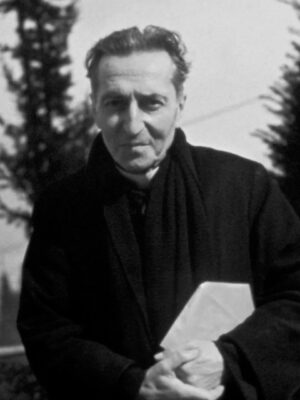
7-8. Clemente Rebora (1885-1957), milanese di nascita, nato da una famiglia laica e garibaldina, si avvicina allo spiritualismo negli anni dell’università. Negli anni Dieci collabora alla rivista letteraria «La Voce», pur non entrando mai a far parte nella redazione, e pubblica Frammenti lirici (1913), tuttora considerata la sua raccolta poetica più importante. Viene chiamato al fronte allo scoppio della guerra, ma subisce un forte trauma cranico a seguito di un’esplosione, e non torna più a combattere. Nel 1922 pubblica Canti anonimi, dove è evidente la crisi religiosa e morale che sta attraversando. Nel 1933 entra in un convento rosminiano di Domodossola, dove diventerà sacerdote. Voce di vedetta morta viene pubblicato per la prima volta sulla rivista «La riviera ligure» il primo gennaio 1917; successivamente confluisce in Poesie e prose liriche (1913-1920) . Rebora avrebbe voluto realizzare un libro sulla guerra, contenente sia prose sia poesie, ma l’opera non è mai stata realizzata.

7-8. Clemente Rebora (1885-1957), Milanese by birth, born to a secular and Garibaldian family, approached spiritualism during his university years. In the 1910s, he collaborated with the literary magazine “La Voce,” although he never became part of the editorial staff, and published Frammenti lirici (1913), still considered his most important poetry collection. He was called to the front at the outbreak of the war, but suffered a severe head injury following an explosion and never returned to combat. In 1922, he published Canti anonimi, where the religious and moral crisis he was going through is evident. In 1933, he entered a Rosminian monastery in Domodossola, where he would become a priest.
Voce di vedetta morta was published for the first time in the magazine “La riviera ligure” on January 1, 1917; it was later included in Poesie e prose liriche (1913-1920). Rebora would have liked to create a book on the war, containing both prose and poetry, but the work was never realized.

Feel the Poem

Partner del Progetto

Hanno partecipato allo sviluppo del Parco Letterario: